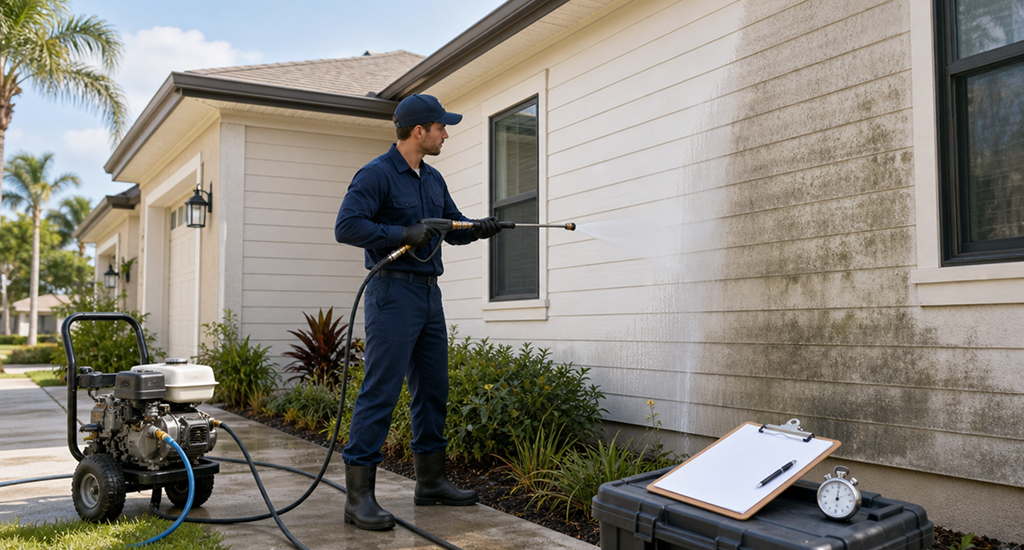
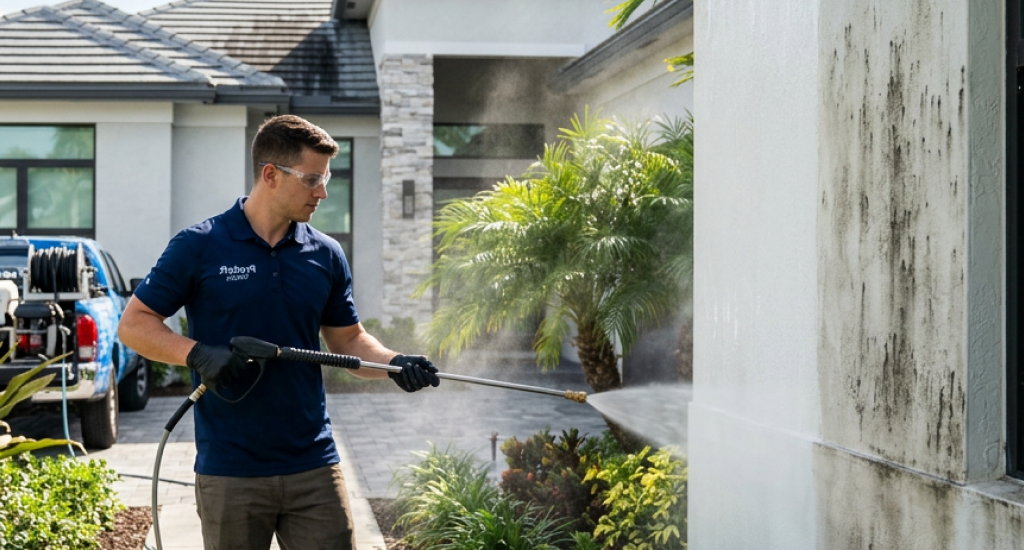
Your roof is turning green. Your siding looks grey and weathered. And no matter how hard you scrub, that mold and algae just keep coming back. There’s a reason for that, and a smarter way to fix it.
So, what is soft wash pressure washing exactly? It’s a low-pressure cleaning method that pairs biodegradable detergents with gentle water pressure (as low as 70 PSI) to kill mold, algae, and mildew at the root, rather than just temporarily blasting them off the surface.
Homeowners, property managers, and anyone with exterior siding, a roof, or a deck that needs deep, lasting results needs to know about this method. Read on to learn everything about how it works, what it costs, and when to use it.
What Is Soft Wash Pressure Washing?
Soft wash pressure washing is a low-pressure cleaning method that uses specialized biodegradable detergents, rather than high-pressure force, to safely remove mold, algae, mildew, and dirt from delicate exterior surfaces.
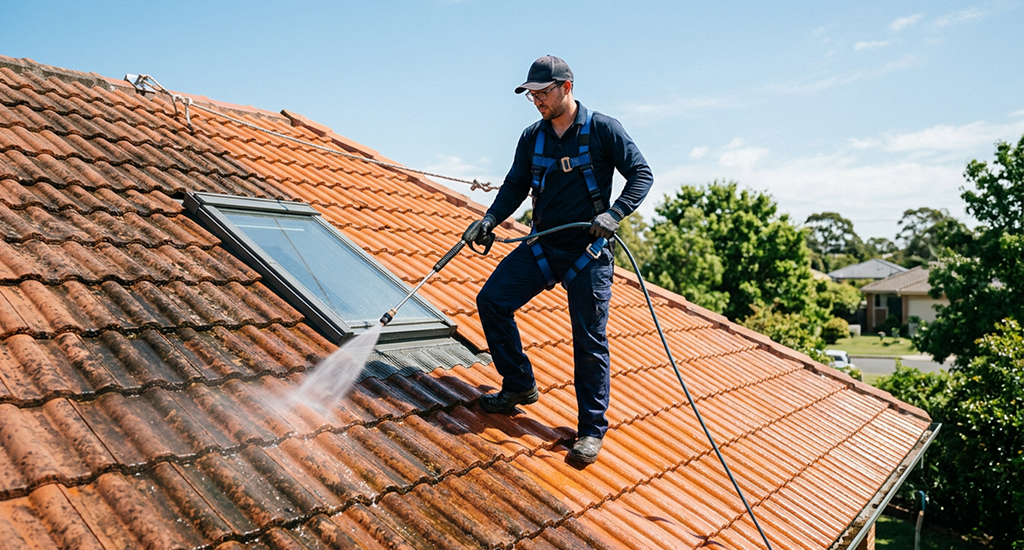
Operating between 150 and 300 PSI (sometimes as low as 70 PSI), it relies on chemical action, not water velocity, to do the heavy lifting.
Unlike traditional pressure washing, which can reach up to 4,000 PSI, soft washing applies a controlled mixture of cleaning agents, primarily sodium hypochlorite (bleach), a surfactant, and water, through a pressure washer, electric pump, or air pump at a very low output.
The result is a thorough, surface-safe clean that eliminates organic growth at the root rather than simply displacing it. This is what makes soft wash pressure washing one of the most effective exterior cleaning techniques available to homeowners today.
How Does Soft Wash Pressure Washing Work?
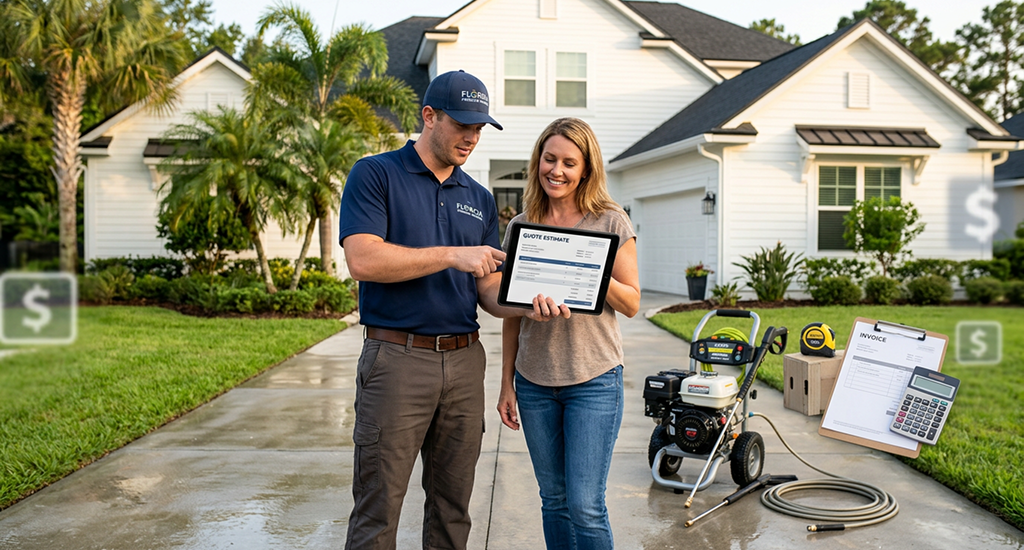
Soft wash pressure washing uses a gentle cleaning method that removes mold, algae, mildew, and dirt without surface damage. Prestige Power Washing in Homestead, Florida, provides this solution for safe exterior cleaning.
Step 1: A Low-Pressure Cleaning Solution Is Applied to the Surface
The process starts with a low-pressure spray that coats the surface with a cleaning solution. This solution reaches the stains, mold, algae, and mildew without using harsh force or damaging delicate materials.
Step 2: The Solution Breaks Down Mold, Algae, and Mildew at the Root
After application, the solution needs time to dwell on the surface. During this time, it breaks down organic growth at the root, which helps remove stains more effectively than pressure alone.
Step 3: Gentle Equipment Protects Roofs, Siding, Stucco, and Other Surfaces
Soft wash systems use special low-pressure pumps, nozzles, and spray guns. These tools spread the solution evenly while protecting roofs, siding, stucco, fences, and other surfaces that may crack or wear under high pressure.
Step 4: The Surface Is Safely Rinsed for a Cleaner Exterior Finish
Once the solution has worked, the surface is rinsed gently with low pressure. Prestige Power Washing in Homestead, Florida, uses this method to leave homes and businesses looking cleaner, fresher, and better protected.
Soft Wash vs. Pressure Wash vs. Power Wash
The core difference between soft washing, pressure washing, and power washing comes down to three variables: PSI, water temperature, and the use of cleaning chemicals.
Soft washing operates at 150-300 PSI with chemical solutions; pressure washing uses cold water at up to 4,000 PSI; and power washing uses heated water at similarly high pressure. Each method has the right context, and using the wrong one on the wrong surface causes real damage.
| Feature | Soft Wash | Pressure Wash | Power Wash |
|---|---|---|---|
| PSI | 150–300 | Up to 4,000 | Up to 4,000 |
| Water Temp | Ambient | Cold | Heated |
| Chemicals | Yes (bleach, surfactant) | No | No |
| Best For | Roofs, siding, painted surfaces | Driveways, concrete, pavers | Grease, industrial surfaces |
Soft Wash vs. Pressure Wash
The difference between soft wash and pressure wash is primarily about PSI and the role of chemistry. Soft washing uses 150-300 PSI and relies on biodegradable detergents to remove organic staining; pressure washing uses up to 4,000 PSI and uses water force alone to scour surfaces clean.
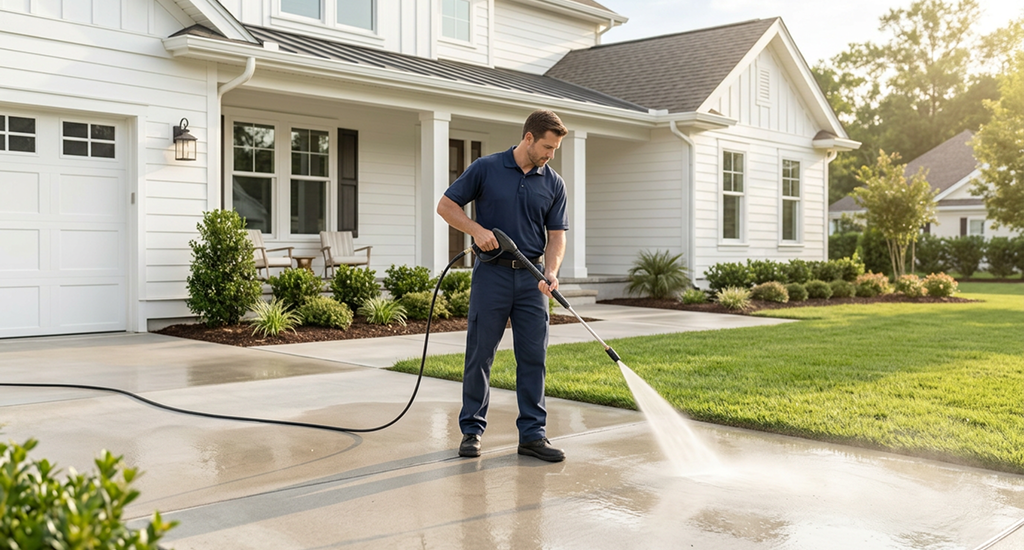
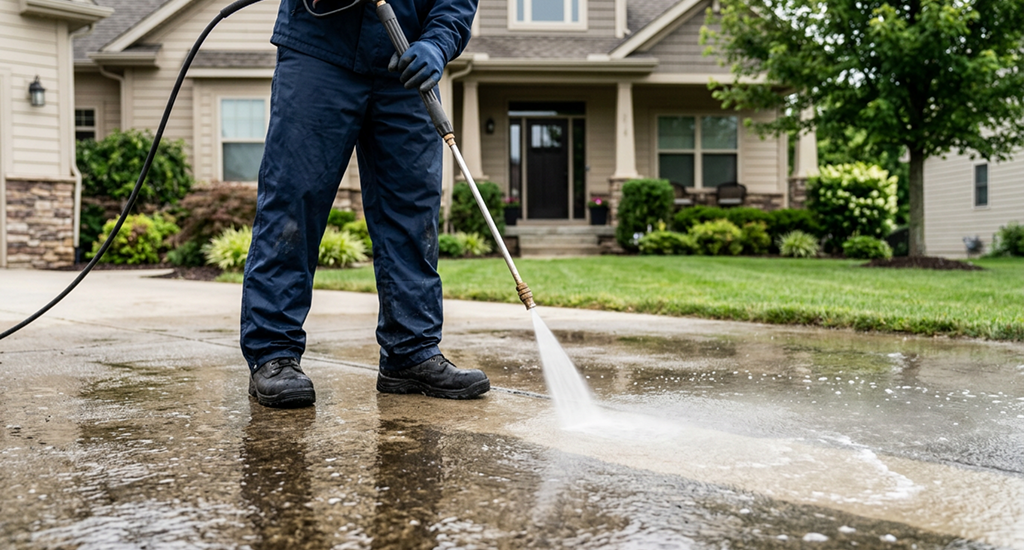
Soft washing is the right choice for roofs, siding, painted wood, and stucco surfaces that would crack, chip, or absorb water damage under high-pressure spray. Pressure washing, on the other hand, is well-suited to flat, hard surfaces like driveways, concrete sidewalks, and brick pavers that can withstand aggressive water force.
The question of what the difference is between pressure washing and soft washing ultimately comes down to this: one removes material by force, the other removes organisms by chemistry.
Soft Wash vs. Power Wash
The distinction between soft washing and power washing is the water temperature. Power washing uses heated water, sometimes near boiling, at high pressure, which makes it highly effective for removing oil, grease, gum, and ingrained grime from commercial surfaces, industrial floors, and heavy-use hardscaping.
Soft washing uses ambient-temperature water at low pressure, making it ideal for residential surfaces where heat and force would both cause damage.
For most homeowners dealing with roof algae, siding mildew, or exterior organic staining, soft washing delivers better, safer results than either pressure washing or power washing.
What Surfaces Can Be Soft Washed?
Soft wash pressure washing service is the recommended cleaning method for any exterior surface that could be damaged by high water pressure, which covers the majority of residential surfaces.
Its chemical-based approach makes it effective on both organic growth (mold, algae, lichen) and non-organic grime, while the low PSI ensures the surface itself stays intact.
The most common surfaces suited to soft washing include:
- Roof shingles: asphalt, tile, and wood shake roofs are all vulnerable to high-pressure damage; soft washing is the only method most roofing manufacturers approve of.
- Vinyl and wood siding: low pressure prevents moisture intrusion behind panels and eliminates the risk of gouging or warping.
- Stucco and EIFS: porous and fragile, these surfaces absorb high-pressure water and crack under force.
- Painted surfaces: soft washing removes staining without stripping paint or leaving surface scarring.
- Wood decks and fences: preserves wood fibers while removing mildew and weathering stains.
- Gutters: cleans organic buildup and oxidation without denting or misaligning the metal.
One notable exception: new concrete is not ideal for soft washing. Fresh concrete needs time to cure and is better maintained with standard pressure washing once it has fully set.
Benefits of Soft Wash Pressure Washing for Your Property
Soft wash pressure washing gives a deeper clean without harsh surface damage. It removes mold, algae, mildew, and stains safely. Contact Prestige Power Washing at Homestead, Florida, for a safer exterior cleaning solution. However, here’s the benefits of soft wash:
It Cleans Delicate Surfaces Without Causing Damage
Soft washing uses low pressure, so it is safer for roofs, siding, painted surfaces, stucco, fences, and wood. It helps prevent cracks, paint stripping, surface marks, and water damage behind panels.
It Removes Mold, Algae, and Mildew More Effectively
Traditional pressure washing may only remove the visible layer of organic growth. Soft washing treats mold, algae, and mildew at the root, which helps stop stains from returning too quickly.
It Keeps Exterior Surfaces Cleaner for Longer
Because soft washing treats the source of the stain, results usually last longer than standard pressure washing. Roofs, siding, and walls can stay cleaner for years with proper professional care.
It Is Safer for Plants, Lawns, and Garden Areas
Professional soft washing uses properly diluted cleaning solutions and careful rinsing before and after service. This helps protect nearby plants, grass, shrubs, and garden beds during the cleaning process.
It’s one of the benefits of soft wash for what homeowners having agarden always choose it.
Final Thought
Soft wash pressure washing is the most effective and surface-safe method for cleaning the exterior of a residential home. By combining low pressure, as little as 70 to 300 PSI, with targeted biodegradable chemistry, it eliminates mold, algae, mildew, and organic staining at the root, keeping surfaces cleaner for years rather than weeks.
Whether you’re maintaining or cleaning your roof, refreshing your siding, or preparing your home for sale, soft washing delivers results that high-pressure methods simply can’t match.